Top Rope Block Sheaves Manufacturers for Global Buyers
Global lifting projects increasingly depend on components that perform reliably under repeated loading, harsh weather, and strict inspection routines. Rope Block Sheaves are central to this system. Their groove profile, bearing arrangement, material quality, and alignment can influence wire-rope life, lifting efficiency, and maintenance costs.
Recent reports from Grand View Research and MarketsandMarkets describe steady growth in global crane, hoisting, and wire-rope equipment demand. These studies connect market expansion with port modernization, construction investment, renewable-energy projects, and industrial automation. However, market forecasts differ. Buyers should treat forecasts as useful signals, not guarantees. Actual performance still depends on design quality and site conditions.
Experienced procurement teams examine more than price. They verify working load limits, sheave diameter-to-rope ratios, groove accuracy, heat treatment, corrosion protection, and documented factory testing. ISO 4309 guidance also reinforces the importance of wire-rope inspection, lubrication, and discard criteria. A manufacturer’s quality system, traceability records, and export experience deserve equal attention. Ask for drawings, material certificates, inspection reports, and clear tolerances before approval.
Small details matter. A poorly matched groove can create uneven contact and accelerate rope wear. A sealed bearing may help in dusty yards, but it still requires suitable maintenance planning. This is where supplier claims need careful review. Certifications can support confidence, yet they cannot replace technical verification. The manufacturers featured in this guide are assessed through product capability, engineering evidence, production consistency, and global buyer support. No supplier is perfect. Careful comparison remains essential.

What Top Rope Block Sheaves Are and How They Function
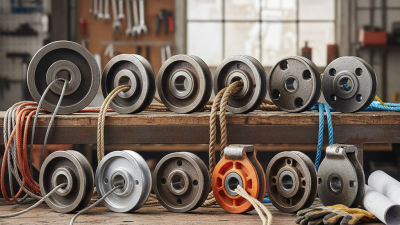
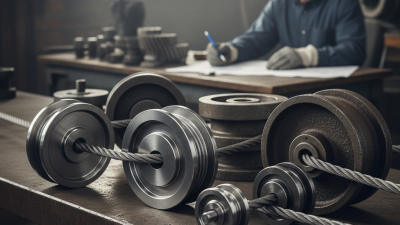
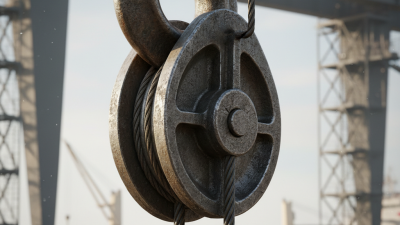
A top rope block sheave is a grooved wheel that guides and supports a wire rope. It usually sits inside side plates, forming a compact lifting block. The groove keeps the rope centered as it travels around the wheel. In simple terms, it redirects rope movement and can improve lifting efficiency.
When the rope passes over one sheave, the lifting direction changes. A block with multiple sheaves can create mechanical advantage, reducing the pulling force required for a load. However, the load is shared across the rope sections, not removed. Sheave diameter, groove shape, bearing quality, and rope alignment directly affect performance. Poor alignment can create uneven wear, heat, and rope damage. Small details matter.
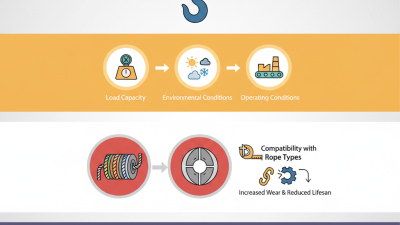
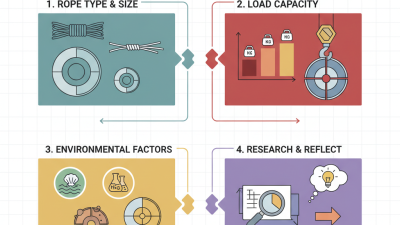
For global buyers, reliable manufacturers should provide working load limits, material specifications, inspection records, and clear installation guidance. The sheave must match the rope diameter and the intended working environment. Salt air, dust, low temperatures, and repeated shock loading require different protection and testing. A catalogue rating can look reassuring, but it may not reflect real site conditions. Buyers should also check replacement bearings, guarding, traceability, and after-sales technical support. In practice, the best selection is not always the heaviest block. Weight, maintenance access, and actual lifting frequency deserve equal attention.
Top Rope Block Sheaves: What They Are and How They Function
Ideal mechanical advantage increases with the number of rope parts supporting the moving block.
A rope block sheave is a grooved wheel mounted inside a pulley block. As the rope passes around multiple sheaves, the load is supported by several rope parts. In an ideal system, the mechanical advantage equals the number of supporting rope parts: four supporting parts provide a 4:1 ideal advantage, while eight provide an 8:1 ideal advantage. Actual lifting capacity is lower because of sheave friction, rope bending, alignment, and equipment weight. Always confirm the working load limit and rope compatibility with applicable lifting standards and the equipment manufacturer.
Leading Manufacturing Regions and Supplier Capabilities
Top Rope Block Sheaves Manufacturers for Global Buyers
Leading Manufacturing Regions and Supplier Capabilities
Asia remains a major sourcing base for rope block sheaves. The World Steel Association recorded about 1.89 billion tonnes of crude steel production in 2023. Asia contributed roughly 70% of global output. This capacity supports forged wheels, machined grooves, shafts, and structural frames. Suppliers in China, India, Japan, and Southeast Asia often provide cost-effective production. Many also offer heat treatment, protective coatings, and load testing. Quality varies between factories.
Europe is known for engineering control and traceability. Manufacturers commonly document material grades, dimensional checks, and non-destructive testing. North American suppliers often focus on heavy-duty lifting systems, replacement parts, and project-based engineering. Buyers should request certificates aligned with ISO 4309, ASME B30.26, or applicable national standards. Standards matter here.
Grand View Research estimates the global wire rope market at approximately US$10 billion in 2023. It also projects annual growth near 5% through 2030. This trend supports demand for larger sheaves in ports, construction, offshore facilities, and industrial cranes. Supplier capability should include groove profiling, bearing selection, fatigue analysis, and corrosion control. The comparison is imperfect. A low quotation may conceal weak inspection records, limited spare parts, or inconsistent hardness. I would assess sample reports, factory experience, and after-sales response before comparing price.
International Standards, Customization, and Export Considerations
Top Rope Block Sheaves Manufacturers for Global Buyers
International Standards, Customization, and Export Considerations
Global buyers should evaluate rope block sheaves through documented performance, not catalog appearance. A reliable manufacturer can provide material certificates, dimensional drawings, load-test records, and traceable component numbers. Standards may include ISO, EN, ASME, or regional requirements, depending on the application and destination. Buyers should confirm which standard governs the complete assembly, not only the sheave wheel.
Customization often involves groove diameter, rope size, frame clearance, bearing type, hook configuration, and surface protection. Hot-dip galvanizing can improve corrosion resistance in coastal environments, while painted steel may suit controlled indoor use. Every change deserves engineering review. A small groove mismatch can accelerate rope wear. That detail is easy to overlook.
Export readiness also affects the real purchase cost. Manufacturers should prepare commercial invoices, packing lists, certificates of origin, inspection documents, and clear operating instructions. Strong export teams understand packaging, moisture control, lifting points, and destination-specific labeling. They should also confirm Incoterms, delivery responsibilities, spare-part availability, and after-sales communication.
Ask for evidence.
In practical sourcing, a factory visit or independent inspection can reveal more than polished photographs. Check machining quality, weld consistency, bearing protection, and marking clarity. I have seen specifications that looked complete but omitted working-temperature limits. That omission required later clarification. Buyers should therefore compare drawings, test methods, warranty terms, and replacement procedures before placing a purchase order.