10 Best Safety Relief Valves for Global Buyers
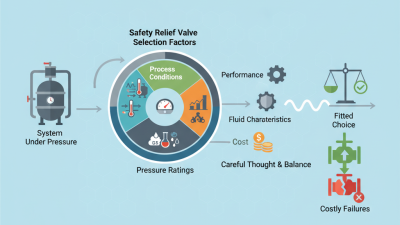
Selecting the right Safety Relief Valve is not a simple catalogue exercise. It involves pressure limits, fluid behavior, temperature changes, installation space, maintenance access, and credible failure scenarios. A valve that appears suitable on paper may chatter, leak, or open too late when operating conditions change.
Market evidence shows why this equipment deserves careful evaluation. Grand View Research identifies the global pressure relief valve market as a growing industrial segment, supported by demand from oil and gas, chemicals, power generation, and water treatment. Fortune Business Insights also reports continued market expansion, driven by stricter process-safety expectations and new industrial capacity. These reports use different definitions and methods. Their numbers should be compared carefully, not treated as absolute truth.
“Safety is not a gadget but a state of mind,” process-safety expert Trevor Kletz famously wrote. His warning remains practical here. A relief valve cannot compensate for poor sizing, blocked discharge piping, weak inspection routines, or incomplete operating data. Small details matter. A corroded spring. A wrong set pressure. A drain left closed.
This guide reviews 10 Best Safety Relief Valves for Global Buyers using recognized engineering principles, manufacturer documentation, and field-oriented selection criteria. It considers API 520, API 521, and ISO 4126 guidance where relevant. The shortlist is not perfect. No shortlist can replace a qualified engineer’s review of each system. Buyers should verify certification, materials, temperature range, backpressure limits, test records, and local installation requirements before purchase.

Define the 10-Valve Scope: PS Above 0.5 bar Under EU PED Rules
For this “10 Best Safety Relief Valves for Global Buyers” review, the scope covers ten relief-valve configurations used with equipment above 0.5 bar PS under the EU Pressure Equipment Directive (PED). PS means the manufacturer’s maximum allowable pressure, not the valve’s opening pressure. That difference matters. A valve may open at 6 bar while the protected vessel has a PS of 10 bar.
Each candidate should be checked against the PED 2014/68/EU framework. Reviewers need the fluid state, fluid group, DN, PS, temperature range, and conformity-assessment category. Safety accessories can require different assessment routes than ordinary pressure components. Check the technical file. Check the declaration. Check traceable test records. A clean nameplate should show set pressure, size, materials, and flow direction. Small omissions create large delays.
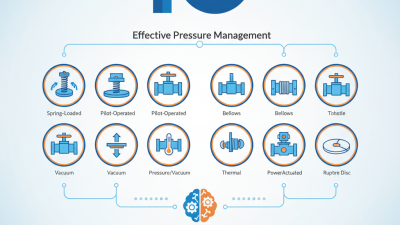
On the workshop floor, I would compare spring-loaded, pilot-operated, and sanitary designs, then examine actual blowdown and reseating performance. Test certificates should match the serial number, not only the product family. That sounds obvious. It is often missed. Installation details also matter: long inlet pipes, blocked outlets, or poor drainage can change performance. A practical weakness remains: catalog data may look precise, while field conditions are not. Buyers should confirm pressure loss, back pressure, temperature, and maintenance access before accepting any valve into the ten-valve scope.
Compare Certified Capacity at 10% Overpressure Using API 520 and ISO 4126
For global buyers, certified capacity at 10% overpressure matters more than catalogue flow figures. API 520 Part I uses 10% overpressure as a common sizing basis for pressure relief devices. ISO 4126-1 also requires capacity verification through controlled testing. These standards do not make every valve equivalent. Orifice area, discharge coefficient, backpressure, temperature, and fluid properties can change the result.
A practical comparison should record the certified mass flow at set pressure plus 10% overpressure. For example, a valve rated at 12,000 kg/h under clean-gas conditions may deliver less with built-up backpressure or a hotter inlet stream. API 520’s gas-sizing equations require compressibility and molecular-weight inputs, not rough estimates. ISO 4126 test certificates should identify test fluid, pressure, temperature, and measured capacity. Check the small print.
Industry data supports this caution. The International Association of Oil & Gas Producers reported thousands of high-potential events across its 2023 safety dataset, with loss-of-containment hazards remaining a serious concern. A relief valve is not a substitute for sound process design, though poor documentation can weaken even a certified installation. Buyers should compare the same units, tolerances, and test conditions across all ten candidates. One uncomfortable question remains: was the certificate produced for the exact trim and configuration being purchased?
Evaluate Set Pressure, Blowdown, Temperature, and Material Performance Data
When comparing the 10 best safety relief valves for global buyers, start with verified performance data. Set pressure should match the protected system, not merely the catalog range. Ask for calibrated test records and clear tolerance values. A small error can cause repeated lifting or delayed protection.
Blowdown deserves equal attention. A tight blowdown may reduce product loss, while an unstable setting can create chatter. Review reseating pressure, capacity curves, and test conditions together.
Temperature changes can alter spring behavior, seals, and discharge performance. Check both normal operating temperature and credible upset conditions.
Material selection must reflect pressure, fluid chemistry, corrosion risk, and cycling frequency. Stainless alloys may suit corrosive service, but they are not universal solutions. Soft seals can improve tightness, yet some lose resilience during high-temperature exposure.
Look beyond polished tables.
In practice, installation quality can undermine excellent valve data. Inspectors often find blocked discharge paths, poor orientation, or unverified torque values. These details deserve the same attention as pressure ratings.
I would also question vague phrases such as “suitable for global service.” Reliable suppliers should provide traceable material certificates, inspection records, maintenance guidance, and local technical support.
Still, published data may not represent every field condition. Recheck assumptions with actual fluid properties and operating history. A careful comparison leaves room for uncertainty.
Verify ASME UV, CE/PED, and ISO 9001 Evidence Before Global Purchase
10 Best Safety Relief Valves for Global Buyers
Global buyers should verify ASME UV, CE/PED, and ISO 9001 evidence before comparing prices. A certificate number is only the starting point. Confirm the issuing body, validity period, covered valve sizes, set-pressure range, and manufacturing site. ASME UV authorization supports pressure-relief device certification, but it does not automatically cover every model.
Under the Pressure Equipment Directive, CE marking should connect to a documented conformity assessment. Check the equipment category, assessment module, notified-body details, and declaration of conformity. Ask for test records showing set pressure, blowdown, leakage, and capacity. Real evidence includes serial numbers and traceable calibration dates. Paperwork without traceability is weak evidence.
ISO’s Survey 2023 reported 1,265,216 valid ISO 9001 certificates worldwide. That scale shows the standard’s importance, but ISO 9001 certifies a quality-management system, not a valve’s pressure performance. Buyers should inspect audit scope, certificate status, and production-site address. The International Organization for Standardization also warns that certification claims must be verified with the relevant certification body. A small mistake matters. One overlooked suffix can link a certificate to another factory, pressure class, or product family. Procurement teams should retain signed declarations, inspection reports, material certificates, and shipment photographs. This process feels slower, yet it is cheaper than discovering nonconformity after installation.