Selecting the world’s leading Safety Relief Valve manufacturers requires more than comparing revenue or factory size. A reliable review must examine engineering depth, certification practices, material quality, testing capacity, and after-sales support. These valves protect boilers, pressure vessels, pipelines, refineries, and chemical processing systems when pressure rises beyond safe limits.
Marc Hellemans, author of The Safety Relief Valve Handbook, states, “A safety valve is only as reliable as its sizing, installation, and maintenance.” That principle guides this overview. Each manufacturer is considered through practical indicators, including documented performance, global service coverage, product range, and experience in demanding industries. A valve may look impressive on paper. Field conditions often reveal more.
The selected companies represent established manufacturers with strong technical reputations. Their solutions may include spring-loaded valves, pilot-operated designs, high-pressure models, and customized systems. Details such as corrosion resistance, set-pressure stability, leakage control, and maintenance access deserve close attention. Small differences matter. So do local service teams.
No list is perfect. Market leadership changes by region, application, and project scale. Some manufacturers publish stronger technical evidence than others, while certain performance claims require independent verification. Buyers should confirm current certifications, testing records, pressure ratings, and compatibility with the intended medium. A respected name cannot replace correct engineering judgment. This guide offers a practical starting point, not a substitute for a qualified pressure-system review.
API 520 offers practical methods for sizing and selecting pressure-relief devices. Engineers commonly review required capacity, set pressure, accumulation, backpressure, and installation conditions. A valve may appear correctly sized on paper, yet fail to perform as expected if discharge piping creates excessive pressure loss. Field measurements and realistic process data remain essential.
ISO 4126 provides an international framework for safety devices, covering performance, construction, testing, and application principles. It supports consistent evaluation across different industrial systems, but it does not replace project-specific engineering judgment. Material compatibility deserves close attention. Corrosive fluids, dirty service, and changing temperatures can affect spring performance and seat tightness.
Global demand for safety relief valves remained strong in 2024, supported by power generation, refining, chemical processing, and industrial expansion. Industry estimates place the market’s annual growth near 5% to 7% through the decade. Exact figures vary because suppliers classify valves, services, and replacement parts differently. That inconsistency deserves attention.
Asia-Pacific held the largest demand share, led by new plants, urban infrastructure, and manufacturing growth in China and India. Southeast Asia also showed momentum, particularly around LNG terminals, chemicals, and utility projects.
North America remained a mature market, with purchases driven by replacement cycles, stricter maintenance programs, and upgrades at aging facilities. Europe grew more steadily, influenced by energy-transition projects and industrial safety investments. The Middle East continued to require high-capacity equipment for refining, gas processing, and desalination.
Leading manufacturers compete through pressure accuracy, corrosion resistance, shorter delivery times, and documented testing. In real maintenance work, these details matter. A valve that lifts too early can interrupt production; one that opens too late can increase risk. Engineers increasingly request material certificates, calibration records, and traceable inspection data. Digital monitoring is gaining interest, but adoption remains uneven. Smaller facilities may lack skilled technicians or reliable operating data. Forecasts often assume smooth investment, yet construction delays and raw-material costs can quickly change regional demand. Market growth is promising, but not perfectly predictable.
A credible ranking should begin with API 526 orifice designations. These standardized sizes make valve comparisons clearer across manufacturers and applications. Still, an orifice letter alone does not prove superior performance. Engineers should compare certified flow capacity, set pressure, temperature range, and backpressure limits. Small details matter.
Capacity data deserves careful review. Look for test conditions, fluid assumptions, correction factors, and documented discharge coefficients. A valve rated for steam may perform differently with gas or liquid service. Reliable manufacturers provide traceable performance records, dimensional drawings, and clear sizing calculations. Independent certification adds useful confidence.
Certifications also separate serious suppliers from polished catalogues. Relevant evidence may include ASME pressure relief certification, ISO 9001 quality systems, and inspection records for materials and testing. Requirements vary by industry and jurisdiction. Check the certificate scope, validity, and issuing body. Do not rely on logos alone.
A practical ranking can weight API 526 compatibility, verified capacity, certification strength, manufacturing consistency, and technical support. Field feedback matters too. A neat spreadsheet cannot reveal every maintenance problem. My own evaluation would remain cautious when data is incomplete. The best comparison rewards evidence, not marketing language. Availability of spare parts and calibration support should also influence the final position.
A credible Top 10 ranking of safety relief valve manufacturers should examine more than sales volume. Product range matters: spring-loaded, pilot-operated, bellows-sealed, thermal, and vacuum relief designs serve different pressure systems. ISO 4126 and ASME Section VIII provide useful reference points for capacity, materials, and certification. The wider industrial valve market was valued at approximately USD 78 billion in 2023, according to Fortune Business Insights. That scale reflects strong demand across energy, chemical processing, water treatment, and manufacturing.
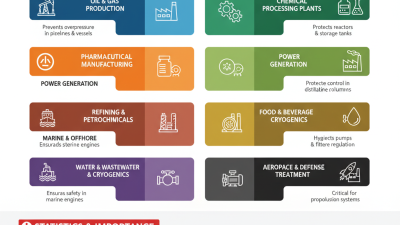
Global reach is another practical measure. Leading manufacturers typically operate regional engineering centers, testing laboratories, and service networks. This reduces delivery delays and improves inspection support near refineries, boilers, pipelines, and pharmaceutical plants. MarketsandMarkets’ 2024 pressure relief valve analysis identifies oil and gas, power generation, and chemical processing as major application sectors. Product breadth becomes especially important where one facility combines steam, corrosive fluids, and high-pressure gas.
Industry use should carry greater weight than advertising claims. A reliable comparison reviews installed references, material traceability, relief-capacity testing, and maintenance support. Some manufacturers offer broad catalogs but limited local service. That weakness matters. Others provide excellent engineering but fewer compact or sanitary models. The ranking can therefore change by region and application, which deserves honest acknowledgment. A valve suited to a power boiler may perform poorly in a chemical reactor. Field documentation, independent certification, and response time should decide the final order.
| Rank | Anonymized Manufacturer Profile | Primary Product Range | Valve Technologies | Global Reach | Key Industry Uses | Common Standards and Approvals | Typical Service Strength |
|---|---|---|---|---|---|---|---|
| 1 | Manufacturer A Global Tier |
Spring-loaded safety valves, pilot-operated relief valves, pressure-vacuum relief valves, rupture-disc systems, and custom-engineered assemblies. | Conventional spring, balanced bellows, pilot-operated, thermal relief, and high-capacity designs. | North America, Europe, Asia-Pacific, the Middle East, and Latin America through direct offices and distributors. | Refining, petrochemicals, chemical processing, power generation, LNG, and offshore production. | ASME Section VIII, API 520, API 526, API 527, EN ISO 4126, and PED-related requirements. | Large process systems, high flow capacity, severe-service applications, and engineered pressure-protection packages. |
| 2 | Manufacturer B Process Specialist |
Process safety valves, relief valves for steam and gas, pilot-operated valves, and integrated monitoring accessories. | Spring-loaded, pilot-controlled, balanced-piston, and soft-seat configurations. | Strong coverage across Europe, North America, Asia-Pacific, and major energy-producing regions. | Oil and gas, hydrogen, ammonia, chemical plants, district energy, and industrial utilities. | ASME Section VIII, API 520, API 527, ISO 4126, PED, ATEX-related equipment requirements, and SIL-related project specifications. | Process automation compatibility, emissions reduction, tight shutoff, and demanding gas-service applications. |
| 3 | Manufacturer C Energy Focus |
Boiler safety valves, steam relief valves, turbine bypass protection, thermal relief valves, and high-pressure steam solutions. | Pop-action spring valves, modulating pilot-operated valves, and high-temperature metal-seated designs. | Worldwide project supply with established service coverage in Europe, Asia, North America, and the Middle East. | Thermal power, cogeneration, biomass, waste-to-energy, nuclear support systems, and industrial steam networks. | ASME Section I, ASME Section VIII, National Board requirements, EN ISO 4126, and applicable pressure-equipment regulations. | Steam, high-temperature service, boiler protection, and power-plant maintenance programs. |
| 4 | Manufacturer D Industrial Range |
Safety relief valves for liquids, gases, and steam; compact relief valves; sanitary pressure-relief products; and accessories. | Direct spring, bellows-sealed, sanitary, thermal expansion, and changeover relief arrangements. | Broad distribution network across Europe, North America, Asia-Pacific, and industrial markets in Africa. | Food and beverage, pharmaceutical manufacturing, water treatment, general industry, and compressed-air systems. | EN ISO 4126, PED, ASME Section VIII, API 527, hygienic design requirements, and regional pressure-equipment codes. | General industrial applications, hygienic processes, utility systems, and cost-efficient standardization. |
| 5 | Manufacturer E Oil & Gas |
API-style pressure relief valves, pilot-operated relief valves, thermal relief valves, and refinery flare-system protection products. | Conventional spring, balanced bellows, pilot-operated, and low-emission configurations. | Strong presence in North America, the Middle East, Southeast Asia, Europe, and major refining hubs. | Upstream production, pipelines, refineries, petrochemical complexes, storage terminals, and FPSO systems. | API 520, API 526, API 527, ASME Section VIII, NACE MR0175/ISO 15156, and project-specific operator standards. | Hydrocarbon service, corrosive media, refinery turnarounds, and low-fugitive-emission requirements. |
| 6 | Manufacturer F European Engineering |
Safety valves, overflow protection, pressure-vacuum valves, bursting-disc combinations, and engineered relief systems. | Spring-loaded, pilot-operated, weight-loaded, and combination pressure-relief technologies. | Europe-centered manufacturing and engineering with international distributors and project partners. | Chemical processing, storage tanks, pharmaceuticals, food processing, water systems, and industrial gases. | EN ISO 4126, PED, ATEX where applicable, ASME Section VIII, API 520, and European tank-protection standards. | Customized European process systems, tank protection, corrosion-resistant materials, and hygienic applications. |
| 7 | Manufacturer G Specialty Materials |
High-alloy safety valves, cryogenic relief valves, fluoropolymer-lined options, corrosion-resistant valves, and rupture-disc assemblies. | Spring-loaded, bellows-sealed, pilot-assisted, cryogenic, and lined relief designs. | International sales coverage serving chemical, energy, semiconductor, and specialty-gas markets. | Specialty chemicals, semiconductor fabrication, LNG, industrial gases, battery materials, and corrosive services. | ASME Section VIII, API 520, API 527, ISO 4126, PED, and material-specific project specifications. | Highly corrosive, toxic, ultra-clean, low-temperature, and high-purity process media. |
| 8 | Manufacturer H Asia-Pacific Network |
Industrial safety valves, boiler valves, steam relief valves, pressure regulators, and general-purpose process protection valves. | Spring-loaded, pilot-operated, balanced-bellows, and compact relief designs. | Extensive Asia-Pacific coverage with export activity across the Middle East, Europe, Africa, and the Americas. | Power generation, shipbuilding, chemical plants, water infrastructure, general manufacturing, and utilities. | ASME Section I, ASME Section VIII, API 520, API 527, ISO 4126, and national pressure-vessel regulations. | High-volume industrial supply, boiler protection, replacement programs, and regional engineering support. |
| 9 | Manufacturer I Cryogenic & Gas |
Cryogenic relief valves, gas-cylinder protection valves, pressure-building relief devices, and low-temperature process valves. | Spring-loaded, compact cryogenic, balanced, and thermal relief configurations for liquefied gases. | Global distribution focused on industrial-gas, healthcare, laboratory, and energy markets. | Industrial gases, medical gases, LNG, hydrogen, cryogenic storage, transport vessels, and laboratory systems. | ISO 4126, ASME Section VIII, CGA-related requirements, TPED where applicable, PED, and cryogenic vessel codes. | Low-temperature service, gas purity, transportable pressure equipment, and compact installation requirements. |
| 10 | Manufacturer J Tank Protection |
Pressure-vacuum relief valves, emergency vents, conservation vents, detonation arresters, and tank-mounted relief equipment. | Weighted pallet, spring-loaded, pilot-assisted, vacuum breaker, and flame-arresting configurations. | International project supply for terminals, storage facilities, chemical sites, and bulk-liquid infrastructure. | Aboveground storage tanks, terminals, biofuels, pharmaceuticals, chemicals, wastewater, and volatile-liquid storage. | API 2000, ISO 28300, EN ISO 16852, ATEX where applicable, and regional tank and hazardous-area requirements. | Atmospheric and low-pressure tank protection, vapor control, fire exposure protection, and emissions management. |

Top 10 Safety Relief Valve Manufacturers Worldwide
Application Comparison: Pressure Classes, Materials, and Flow Capacity
Safety relief valves should be compared by service conditions, not catalogue popularity. Pressure class determines the flange rating and allowable operating range. ASME Section VIII and API 520 require capacity sizing against set pressure, temperature, backpressure, and fluid phase. A valve rated for Class 150 may suit low-pressure steam, but it can fail the application review on a high-pressure hydrocarbon line. Small errors matter.
Material selection follows the process chemistry. Carbon steel is economical for dry, moderate-temperature services. Stainless steel offers better resistance to moisture and many corrosive fluids. Nickel-based alloys may be necessary for sour, chloride-rich, or high-temperature duties. ISO 4126 testing supports functional verification, while API 526 provides standardized face-to-face dimensions for flanged designs. These standards improve interchangeability, but they do not replace site-specific engineering.
Flow capacity needs careful interpretation. A 2024 industrial valve market analysis by MarketsandMarkets identifies energy, chemical processing, and water infrastructure as major demand sectors. Their equipment requirements differ sharply. A refinery relief valve may need high vapor capacity, while a boiler valve must handle steam without unstable lifting. Certified coefficient data, discharge piping losses, and built-up backpressure should be checked together. I have seen oversized valves look safer on paper. They can chatter in service. That assumption deserves challenge. Temperature cycling, corrosion allowance, inspection access, and repair history often reveal more than nominal pressure class alone.
ASME pressure classes and approximate pressure ratings at 38°C (100°F)
Common for general industrial service, steam, air, and non-corrosive hydrocarbons.
Often selected for corrosive, sanitary, chemical, and wet-gas applications.
Used when high corrosion resistance or elevated-temperature performance is required.
Pressure class indicates the valve or flange pressure-temperature rating; it does not define flow capacity. Certified relief capacity must be selected using the fluid, relieving pressure, relieving temperature, back pressure, discharge coefficient, and effective orifice area. Material selection must also consider corrosion, temperature, and compatibility with the process medium.
Reference basis: ASME B16.34 pressure-temperature classes and ISO 4126-1 safety valve selection principles. Values shown are approximate reference ratings at 38°C and are not a substitute for certified sizing data.