Choosing the 2026 top Oil Drilling Equipment suppliers requires more than comparing product catalogs. Drilling contractors need dependable rigs, mud pumps, top drives, blowout preventers, and control systems. Each component must perform under pressure, vibration, dust, and changing well conditions.
This guide examines suppliers through practical criteria. These include equipment reliability, engineering depth, service coverage, replacement-parts access, safety records, and lifecycle cost. A supplier may offer an advanced automated rig, yet limited field support can create expensive delays. Another company may provide simpler equipment with stronger regional maintenance teams. That difference matters on a remote drilling site.
Real experience often reveals details that brochures omit. Technicians notice response times, documentation quality, spare-parts packaging, and how quickly a pump returns to service. Operators also evaluate fuel use, setup time, emissions controls, and compatibility with existing systems. These points help separate durable solutions from attractive promises.
No ranking is perfect. Data changes.
Market conditions, acquisitions, and new technologies may alter supplier positions during 2026. Some companies perform exceptionally in offshore projects, while others serve land-based contractors more effectively. Regional regulations and geological conditions also influence the best choice. A supplier trusted in one basin may not fit another operation.
The following overview presents leading manufacturers and service providers with a balanced, evidence-based perspective. It considers public technical information, industry reputation, customer support, and observable field performance. Readers should still verify certifications, warranty terms, local service capacity, and total ownership costs before making a purchasing decision. Supplier quality is important, but project fit remains decisive.
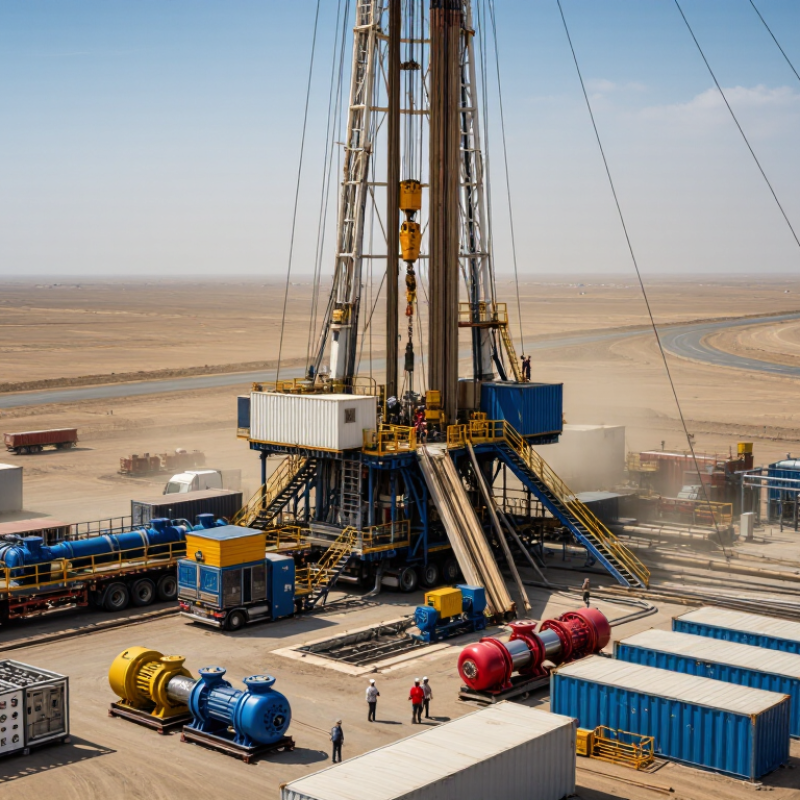
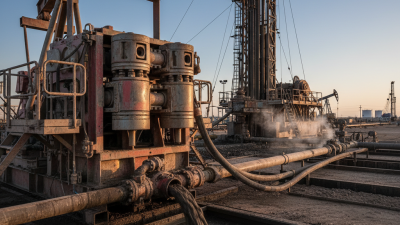
Oil drilling equipment is the working system that creates, controls, and monitors a well. It includes drilling rigs, top drives, drill pipes, mud pumps, pressure-control equipment, and digital sensors. A rig turns surface power into controlled rotation below ground. Mud pumps carry cuttings back to the surface and help manage formation pressure. Blowout preventers provide a critical barrier when pressure changes unexpectedly. Sensors track torque, vibration, temperature, and fluid flow.
In 2026, this equipment matters because drilling projects face tighter safety, efficiency, and environmental expectations. Reliable suppliers should provide tested components, clear maintenance records, trained technicians, and responsive spare-parts support. Their equipment should also connect with modern monitoring systems without creating confusing data gaps. On a busy rig floor, a loose connection or delayed alarm can waste hours and increase exposure to danger. Small details matter.
A strong supplier does more than deliver a machine. It understands well conditions, operating temperatures, local regulations, and the crew’s practical limits. Independent testing and transparent certification deserve careful attention. However, impressive specifications do not guarantee dependable performance. That is an uncomfortable truth. Site conditions can defeat a perfect plan. Operators still need inspections, realistic training, and backup procedures. The best equipment supports sound decisions; it cannot replace them.
Top suppliers should be evaluated by field performance, not catalog size. Procurement teams should examine uptime, failure frequency, maintenance hours, and spare-part availability. A rig cannot wait three weeks for a critical mud-pump valve.
The IEA’s Oil 2025 report expects global oil demand to approach 105 million barrels per day by 2030. This outlook increases pressure on equipment reliability and operating efficiency. Baker Hughes’ international rig-count data tracks active rigs across more than 100 countries. Buyers can compare supplier support against regional drilling activity. Useful evidence includes mean time between failures, repair records, warranty claims, and documented well-site performance.
Safety and engineering quality require equal attention. Evaluation teams should review pressure ratings, material traceability, inspection procedures, and certification records. Energy use also matters. The IEA estimates that efficiency improvements can reduce industrial energy demand substantially, although actual savings depend on operating conditions. Suppliers should provide measured fuel, power, and emissions data, not attractive estimates.
Digital capability deserves practical testing. Can the system detect vibration before a bearing fails? Can technicians use the dashboard during a dusty night shift? Sometimes, no. Cybersecurity controls, training quality, and local service coverage should be tested through realistic scenarios. Price rankings can mislead when downtime costs are excluded. My assessment remains imperfect: laboratory results rarely capture harsh formation changes, rushed maintenance, or human error. A spreadsheet can still lie.
Global oil drilling equipment leaders are judged by more than annual sales. The International Energy Agency’s Oil 2025 report forecasts global oil demand reaching 105.5 million barrels daily by 2030. This outlook supports continued equipment investment, but spending will remain selective.
S&P Global Commodity Insights’ 2025 market assessments identify capability as a stronger measure than equipment volume. Leading suppliers typically provide offshore rigs, automated drilling systems, pressure-control equipment, and dependable replacement parts. Their advantage appears in harsh conditions, where downtime can cost millions of dollars daily. Digital monitoring also matters. Sensors can detect vibration, temperature, and drilling pressure before failures occur. However, supplier rankings are not perfect. Regional service coverage can matter more than global revenue.
Tips: Compare lifecycle cost, not purchase price. Check spare-parts access near the operating area. Request verified uptime records and independent safety documentation. A low-cost rig may become expensive after one delayed repair.
The IADC’s industry guidance emphasizes competency, maintenance discipline, and documented operating procedures. Buyers should therefore examine technician training, equipment certification, cybersecurity controls, and emergency response plans. Strong suppliers offer field engineers, clear maintenance schedules, and measurable performance guarantees. Local manufacturing can reduce delivery risk, while modular designs simplify upgrades. These details often separate a reliable supplier from a merely visible one.
| Equipment Segment | Primary Application | Typical Technical Range | 2026 Market Demand Signal | Key Supplier Qualification Criteria | Relative Growth Outlook |
|---|---|---|---|---|---|
| Land Drilling Rigs | Onshore oil, gas, and unconventional drilling | Approximately 1,000–3,000 horsepower; AC or SCR electrical systems; automated pipe handling increasingly common | Steady replacement demand, with stronger activity in unconventional and mature-field markets | High mobilization speed, pad-drilling compatibility, energy efficiency, automation, and local service coverage | Stable to moderately positive |
| Offshore Jack-Up Rigs | Shallow- and medium-water offshore drilling | Normally designed for water depths up to roughly 400 feet, with larger units extending beyond this level | Demand supported by redevelopment, infill drilling, and selected shallow-water exploration programs | Leg strength, preload capability, cantilever reach, variable deck load, and harsh-environment certification | Moderately positive |
| Semisubmersible Rigs | Deepwater and harsh-environment exploration or development | Commonly configured for approximately 5,000–10,000 feet of water depth, depending on design | Selective growth from deepwater project sanctions and long-term field development | Station-keeping reliability, motion response, drilling automation, equipment redundancy, and safety record | Positive, but project-dependent |
| Drillships | Ultra-deepwater exploration and subsea development drilling | Modern units may operate in approximately 10,000–12,000 feet of water and drill to about 35,000–40,000 feet total depth | Among the strongest offshore segments where deepwater capital projects receive final investment approval | Dynamic positioning, dual-activity capability, riser systems, high-pressure equipment, and subsea integration | Strongest offshore outlook |
| Top Drives | Rotary drilling, directional drilling, and automated tripping operations | Common power classes range from approximately 500 to 2,000 short tons, with torque selected by well design | Replacement and retrofit demand driven by automation, extended-reach wells, and reduced nonproductive time | Torque capacity, braking performance, maintainability, control-system integration, and vibration management | Moderately strong |
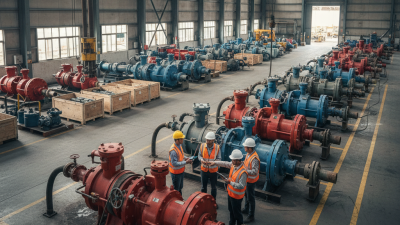
| Mud Pumps | Circulation of drilling fluid and management of downhole pressure | Triplex and quintuplex designs; pressure and flow selected for well depth, hole size, and drilling-fluid program | Consistent replacement demand because pumps are high-wear, mission-critical components | Hydraulic efficiency, liner and expendable life, pulsation control, spare-parts availability, and service response | Stable and recurring |
| Blowout Preventers | Well-control protection during drilling and completion operations | Common rated working pressures include 5,000, 10,000, and 15,000 psi; configurations vary by well program | Stable demand with additional spending on high-pressure, high-temperature, and subsea well-control systems | API compliance, pressure testing, elastomer performance, ram reliability, control-system redundancy, and inspection history | Moderately positive |
| Drawworks and Hoisting Systems | Raising, lowering, and suspending the drillstring and casing | Capacity is selected by hook load, mast design, drilling depth, and casing program; automated systems are increasingly deployed | Retrofit demand linked to automation, electrification, and modernization of older rigs | Load rating, braking redundancy, variable-frequency drives, safety interlocks, and predictive-maintenance capability | Stable to moderately positive |
| Solids-Control Equipment | Removal of drilled solids and conditioning of drilling fluid | Shale shakers, desanders, desilters, centrifuges, and dryers are selected according to flow rate and solids loading | Demand follows rig activity and increases where operators prioritize fluid reuse and waste reduction | Separation efficiency, throughput, fluid recovery, screen durability, footprint, and environmental performance | Moderately positive |
| Directional Drilling and Measurement Systems | Horizontal, extended-reach, geosteering, and complex well placement | Measurement-while-drilling and logging-while-drilling systems transmit directional, pressure, and formation data downhole | Strong demand from unconventional wells, mature-field optimization, and fewer-well development strategies | Telemetry reliability, high-temperature tolerance, data quality, drilling accuracy, and software interoperability | Strong |
| Digital Rig and Automation Systems | Remote monitoring, automated pipe handling, collision avoidance, and drilling optimization | Typically integrates rig controls, sensors, historian platforms, alarm management, and condition monitoring | One of the fastest-growing equipment-related investment areas because of safety and productivity targets | Cybersecurity, open interfaces, data ownership, fail-safe design, operator training, and measurable uptime gains | High |
The 2026 leaders in oil drilling equipment will compete through integrated systems, not isolated machines. The IEA’s Oil 2024 report projects global oil demand to reach 105.4 million barrels per day by 2030. That outlook supports continued investment in land rigs, offshore drilling packages, well-control equipment, and high-pressure pumping systems.
Modern suppliers are offering electric top drives, automated pipe-handling units, and modular rig designs. These systems reduce manual handling near the rotary table and improve deployment speed. Managed-pressure drilling technology helps control narrow pressure windows in deep and complex wells. Measurement-while-drilling tools transmit formation data while drilling, allowing engineers to adjust direction before costly corrections become necessary. Digital twins also connect sensors, maintenance records, and operating limits on one screen. Useful, but not magic.
Baker Hughes’ international rig-count reports continue to show active drilling across multiple regions, although activity changes with commodity prices. This volatility makes equipment flexibility important. Suppliers now develop hybrid power systems, remote monitoring, and condition-based maintenance for harsh offshore environments. The IOGP’s safety guidance also emphasizes engineered barriers, verified well-control procedures, and competency management. Technology cannot replace disciplined crews. That point is easy to underestimate. A supplier may advertise automation, yet field reliability still depends on spare parts, local training, cybersecurity, and responsive technical support. Buyers should examine independent test records, failure histories, lifecycle costs, and actual operating data before selecting a system.
Choosing an oil drilling equipment supplier in 2026 requires more than comparing catalog prices. Equipment must match well depth, pressure, temperature, mud type, and site conditions. The International Energy Agency reported about 570 billion dollars in upstream oil and gas investment for 2024. That scale increases demand for reliable, serviceable equipment.
Buyers should examine test records, maintenance history, spare-parts access, and field support coverage. Ask for documented performance under comparable conditions. Certifications aligned with API and ISO requirements can reduce technical risk, but paperwork alone proves little. A supplier should explain failure rates, inspection intervals, and emergency response times. Field engineers often notice small weaknesses first, such as poor hose routing or slow seal replacement. Those details can stop a rig.
Tips: Build a weighted scorecard before requesting quotations. Give safety, uptime, compatibility, and lifecycle cost higher scores than purchase price. Check whether the supplier can train crews and provide local technicians. The IEA’s Oil 2024 outlook expects oil demand growth to slow sharply this decade, so adaptable equipment may protect future investment. Still, forecasts can miss regional disruptions. Buyers should challenge assumptions and request evidence. Cheap equipment is not always economical. Sometimes, it is merely cheap.