As drilling operations enter 2026, rig owners are evaluating accessories through reliability, safety, and measurable operating value. The question is no longer simply which tools look advanced. It is which Rig Accessories reduce downtime beside a muddy wellsite, under vibration, dust, and changing weather.
The International Energy Agency’s Oil 2025 report projects global oil demand will approach a plateau near 105.5 million barrels per day by 2030. This outlook suggests a more disciplined investment environment, where equipment must improve productivity rather than add complexity. Baker Hughes’ international rig-count reporting also remains a useful market signal, showing why contractors continue prioritizing adaptable equipment across changing drilling regions.
Several accessory groups deserve close attention in 2026. Automated pipe-handling systems can reduce manual exposure around the rotary table. High-efficiency mud pumps support steadier circulation and better control of drilling fluids. Remote monitoring units can track pressure, temperature, vibration, and maintenance indicators before minor faults become expensive shutdowns. Heavy-duty lighting, cable-management systems, filtration units, and certified lifting accessories also influence daily performance, although they often receive less attention.
Safety cannot be treated as a purchasing afterthought. API Specification 7K provides requirements for drilling and well-servicing equipment, while site procedures must align with applicable regional regulations and manufacturer instructions. A cheaper accessory may create higher lifecycle costs if seals fail, sensors drift, or replacement parts remain unavailable.
No accessory wins everywhere. Soil conditions, rig design, crew skill, and service support still matter. This guide compares the leading Rig Accessories for 2026, using operational experience, published industry guidance, and practical maintenance concerns. Some conclusions remain debatable, because real wellsite data is rarely perfect. That uncertainty deserves attention.
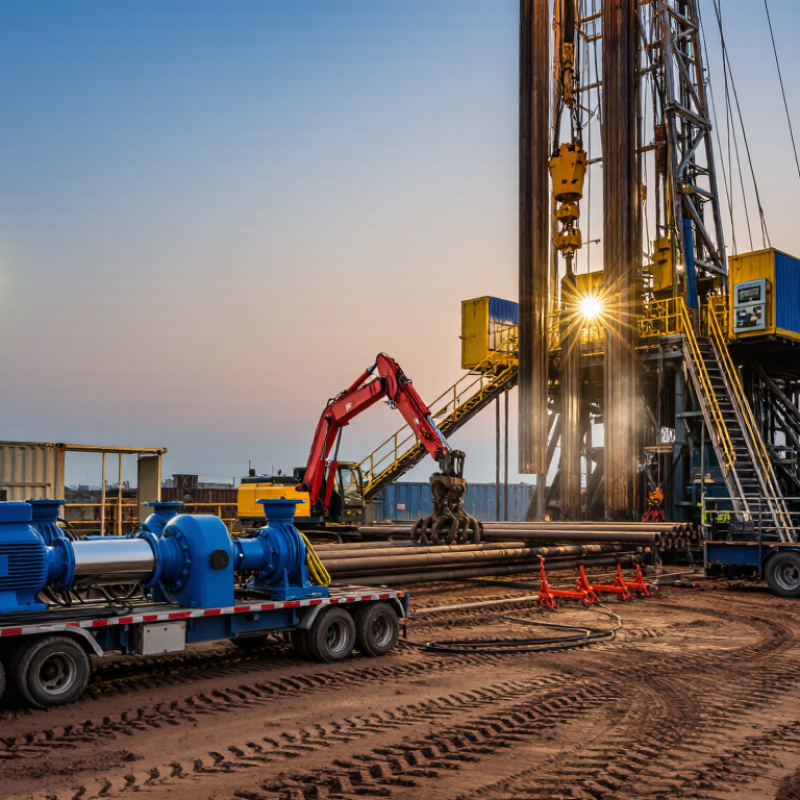
In 2026, rig accessories will do more than support drilling equipment. They will improve visibility, control, and safer daily decisions. Real field experience shows that small components often affect the entire operation. A damaged sensor cable can delay a shift. Poor lighting can hide a leak near the work floor.
The International Energy Agency’s Oil 2024 report projects oil demand will reach about 105.4 million barrels per day by 2029. This suggests drilling efficiency will remain important, even as energy systems change. Its World Energy Investment 2024 report also forecasts more than 3 trillion dollars in global energy investment.
Rig accessories must therefore support productivity with less waste. Useful choices include real-time torque sensors, automated pipe-handling tools, high-visibility work lights, emergency shutdown controls, and corrosion-resistant hose systems.
The International Association of Oil and Gas Producers publishes safety performance indicators because equipment design directly affects exposure to hazards.
Remote monitoring can reduce unnecessary manual checks. Guarding and access platforms can prevent slips around wet, crowded work areas. The details matter.
Not every upgrade works equally well. An advanced sensor can fail when calibration routines are ignored. A stronger accessory may still create maintenance problems. Operators should review failure records, training needs, inspection intervals, and compatibility before purchase.
That step is often missed. The best accessory is not always the newest one; it is the one workers can understand, inspect, and trust during a difficult shift.
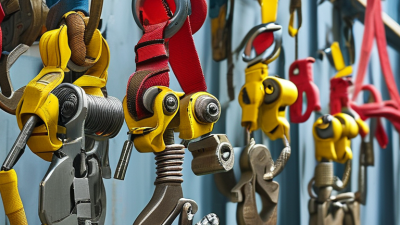
In 2026, the top rig accessories focus on stability before appearance. Adjustable leveling feet help compensate for uneven floors, especially in workshops with old concrete surfaces. Locking casters add mobility without sacrificing support during operation. A rig should move when needed, then stand firmly.
Cross braces reduce side-to-side movement under repeated loads. Vibration-damping pads protect sensitive equipment and improve measurement consistency. Load-rated clamps also matter. They should match the frame diameter and remain tight after hours of use. Small details can prevent large problems.
Cable trays keep wires away from moving joints and reduce accidental snags. Quick-release mounts make equipment changes faster, but they need a positive locking mechanism. I prefer accessories that can be checked by hand. Clear markings help too. A heavier rig is not always better. Excess weight can complicate transport and place stress on weak connection points. I once underestimated floor vibration, and the readings slowly drifted during testing. That mistake changed my setup process. Now, I inspect fasteners, contact points, and floor clearance before each session. These checks take minutes. They often reveal loose hardware or uneven loading early. The best accessory is the one that supports steady performance without creating another maintenance problem.
What Are the 2026 Top Rig Accessories?
Smart technology is changing how modern drilling rigs are monitored, controlled, and maintained. In 2026, high-value accessories will include vibration sensors, automated pipe-handling controls, edge-computing units, and digital-twin platforms. These systems collect pressure, torque, temperature, and movement data near the equipment. Operators can then identify abnormal patterns before a small fault becomes costly downtime.
The International Federation of Robotics reported 541,302 industrial robots were installed worldwide in 2023, a 10% annual increase. That figure does not represent drilling rigs directly, but it shows the wider direction of industrial automation. On active rigs, sensor networks can support remote inspections and automatic shutdown alerts. A rugged tablet may display a live equipment model beside the real machinery. That detail matters when visibility is poor or the deck is crowded.
Automation still needs experienced judgment. Deloitte’s 2025 oil and gas outlook emphasizes stronger digital investment and operational resilience across the sector. Yet data quality remains a weak point. Dust, vibration, poor calibration, and interrupted connections can create misleading readings. Field teams should verify alerts against physical evidence, maintenance records, and established safety procedures. Sometimes, the smartest accessory is a manual override that works. Human oversight remains necessary.
| Rig Accessory | Primary Function | Smart Technology or Automation | Typical Data Measured | Typical Operating Range | Main Benefit | Automation Readiness |
|---|---|---|---|---|---|---|
| Automated Pipe-Handling System | Transfers drill pipe, casing, and tubulars between storage areas and the drill floor. | PLC control, position sensors, anti-collision logic, remote operation, and automated sequence control. | Load position, cycle time, hydraulic pressure, motor current, and fault status. | Payloads commonly range from 1,000 to 5,000 kg, depending on configuration. | Reduces manual handling and improves repeatability during tubular movements. | High |
| Top-Drive Condition Monitoring Package | Monitors the mechanical and electrical health of the top-drive assembly. | Vibration analysis, temperature sensing, torque trending, and predictive-maintenance algorithms. | Torque, rotational speed, motor temperature, bearing vibration, and operating hours. | Sampling rates commonly range from 1 to 20 kHz for vibration channels. | Identifies developing faults before they cause unplanned downtime. | High |
| Managed Pressure Drilling Choke Manifold | Controls annular pressure while maintaining a selected bottom-hole pressure profile. | Automated choke adjustment, pressure feedback loops, remote control, and alarm management. | Standpipe pressure, casing pressure, flow rate, choke position, and equivalent circulating density. | Common pressure classes include approximately 5,000 to 15,000 psi. | Improves pressure control in narrow operating windows. | High |
| Real-Time Drilling Data Gateway | Collects and distributes data from rig sensors, control systems, and downhole tools. | Industrial Ethernet, edge computing, time synchronization, protocol conversion, and secure dashboards. | Weight on bit, rate of penetration, torque, pressure, flow, temperature, and vibration. | Data refresh rates typically range from 1 to 100 samples per second. | Creates a consistent data layer for remote monitoring and analytics. | High |
| Automated Drawworks Control | Regulates hoisting, lowering, braking, and tripping speed of the drill string. | Closed-loop speed control, load feedback, anti-slip logic, and automatic tripping modes. | Hook load, line speed, drum position, brake temperature, and motor torque. | Control accuracy is often designed within approximately ±1% to ±3% of setpoint. | Improves tripping consistency and reduces shock loading. | High |
| Digital Mud-Pulse Telemetry Interface | Receives and processes downhole measurements transmitted through drilling fluid pulses. | Automated signal decoding, noise filtering, quality scoring, and surface data integration. | Directional data, inclination, azimuth, toolface, pressure, and downhole temperature. | Typical telemetry rates range from about 0.5 to 20 bits per second. | Supports directional decisions while drilling and reduces interpretation delays. | Medium |
| Electronic Torque-and-Drag Monitoring | Tracks mechanical resistance and load changes during drilling and pipe movement. | Model-based analysis, automated trend comparison, threshold alarms, and event detection. | Hook load, surface torque, drag, block position, and calculated friction factor. | Alarm thresholds are normally configured from historical and modeled operating values. | Helps detect hole-cleaning problems, pack-off risk, and abnormal drag. | High |
| Machine-Vision Safety System | Detects personnel, vehicles, dropped objects, and restricted-zone entry. | Computer vision, geofencing, object classification, audible alarms, and event recording. | Object location, movement direction, zone occupancy, and alert response time. | Detection areas commonly cover approximately 90° to 360°, depending on sensor layout. | Reduces exposure to moving equipment and improves situational awareness. | High |
| Variable-Frequency Drive Power Package | Controls the speed and torque of electric motors used by pumps, drawworks, and auxiliaries. | Load-based speed control, regenerative braking, soft starting, and energy monitoring. | Voltage, current, frequency, power factor, motor speed, and energy consumption. | Motor speed can commonly be controlled from 0 to 100% of rated speed. | Improves process control and can reduce energy use during variable-load operation. | High |
| Automated Solids-Control Sensors | Monitors shale-shaker, centrifuge, and mud-treatment performance. | Particle-size analysis, flow monitoring, automated alarm limits, and equipment-status tracking. | Mud density, flow rate, vibration, screen loading, particle size, and solids concentration. | Density monitoring commonly covers approximately 0.8 to 2.5 g/cm³. | Supports stable drilling-fluid properties and reduces process variability. | Medium |
| Remote Operations and Digital-Twin Console | Provides centralized visualization, simulation, and supervisory control of rig activities. | 3D equipment models, scenario testing, alarm prioritization, workflow automation, and secure remote access. | Equipment state, process trends, alarm history, maintenance indicators, and operational KPIs. | System latency is commonly targeted below 100 to 250 milliseconds for supervisory functions. | Improves decision-making and allows selected tasks to be supervised from a safer location. | Medium |
| Predictive Maintenance Sensor Kit | Detects early degradation in pumps, motors, gearboxes, generators, and rotating machinery. | Wireless sensors, edge analytics, anomaly detection, and maintenance work-order triggers. | Vibration, temperature, acoustic emissions, lubrication condition, and runtime. | Battery-powered wireless sensors often operate for several months to multiple years, depending on sampling frequency. | Reduces reactive maintenance and supports condition-based servicing. | High |
What Are the 2026 Top Rig Accessories?
Safety starts with small, visible controls. In 2026, high-quality fall-protection systems, anti-slip grating, gas detectors, and high-output work lights remain essential rig accessories. The International Association of Oil & Gas Producers reported that slips, trips, falls, and struck-by events continue to contribute significantly to serious incidents. A wet walkway can become dangerous within seconds. Anti-slip surfaces, drainage channels, and clear access routes reduce that exposure. Portable gas monitors also support faster decisions near enclosed or poorly ventilated areas. Test them before every shift.
Maintenance accessories now focus on early warnings. Wireless vibration sensors, thermal inspection tools, contamination-control kits, and digital torque verification can identify problems before failure. A U.S. Department of Energy maintenance guide notes that predictive maintenance can reduce downtime and lower maintenance costs when data is applied correctly. The data is useful. The installation still matters. A loose sensor gives false confidence. Technicians should check mounting points, battery status, and calibration records during routine rounds.
Efficiency improvements are practical, not flashy. Modular hose reels, organized tool storage, LED task lighting, and quick-connect service lines reduce searching and repeated movement. The National Safety Council continues to link workplace incidents with significant productivity and financial losses. Better organization helps protect both people and schedules. Field teams should record recurring delays, not just equipment faults. That habit often reveals overlooked causes, such as poor lighting or awkward access. No accessory fixes weak procedures.
What Are the 2026 Top Rig Accessories?
Choosing rig accessories should begin with the application, not the appearance. A compact camera rig needs a lightweight cage, a secure handle, and a short mounting arm. These parts improve control without exhausting the operator during long handheld shoots. Check the cage dimensions, thread standards, and supported camera weight before ordering. A perfect-looking accessory can still cause poor balance.
For studio production, a sliding rail system, external monitor, and adjustable follow-focus unit offer smoother operation. Choose rigid materials when the rig stays on a tripod or shoulder platform. For documentary work, select quick-release plates, protected cable clamps, and a low-profile battery mount. Field conditions punish loose connections. Dust and sudden movement reveal weak designs quickly.
Small details matter.
For vehicle shots, vibration control becomes more important than extra mounting points. Use damped arms, safety cables, and locking joints rated above the working load. A larger monitor may help focus, but it also increases power use and side weight. I have found that overbuilding a rig can make it slower to handle. That is an easy mistake to repeat. Test the complete setup with the real lens, battery, and microphone attached. If the rig feels front-heavy after ten minutes, the accessory choice needs another look.