2026 Top Well Drilling Machine Trends for Global Buyers?
The world of well drilling machines is evolving rapidly. As technology advances, global buyers are seeking the latest innovations. Understanding these trends is essential for making informed purchasing decisions.
In 2026, several factors influence the market for well drilling machines. These include environmental regulations, energy demands, and construction advancements. Buyers need to consider efficiency and sustainability. This can be challenging, as not all options provide clear benefits.
Experts predict that automation and smart technology will lead the charge in improving performance. However, potential buyers should remain cautious. Not every new feature guarantees superior results. It's crucial to balance innovation with practical applications. By examining these trends closely, buyers can make better choices in well drilling machinery.
Emerging Technologies in Well Drilling Machines for 2026
The well drilling industry is poised for significant transformation in 2026 due to emerging technologies. As per a recent report by the International Energy Agency, automation and AI-driven monitoring systems are expected to increase efficiency by 30%. These technologies enhance precision, reduce downtime, and lower operational costs.
New advancements in drilling methods, such as micro-drilling and horizontal drilling, are gaining traction. These methods minimize the environmental footprint and enhance resource extraction, catering to the rising global demand for sustainable practices. A study published in the Journal of Petroleum Technology noted that over 25% of oil and gas companies are investing in these innovative techniques to meet both economic and environmental goals.
However, there are challenges to consider. The integration of new technologies often requires trained personnel, creating a skills gap. Additionally, the initial investment can be substantial. Companies must weigh these factors against long-term benefits. As the landscape evolves, adherence to safety standards and regulatory compliance remains crucial to avoid setbacks.
2026 Well Drilling Machine Trends
Sustainability Trends Impacting Global Well Drilling Practices
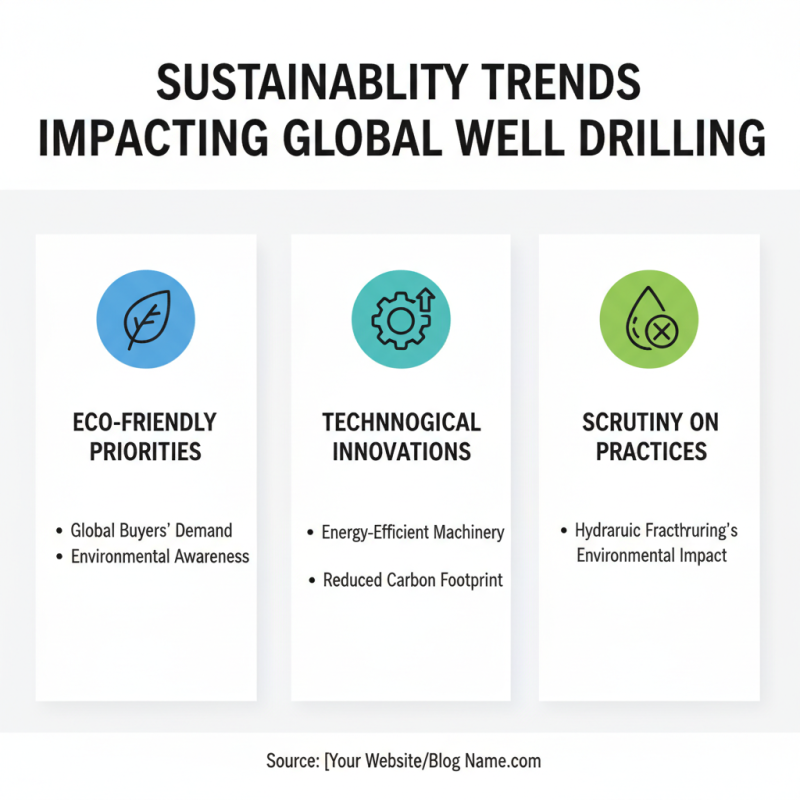
Sustainability is reshaping the well drilling industry. Many global buyers now prioritize eco-friendly practices. This change is driven by awareness of environmental issues. Companies are moving towards energy-efficient machines. These innovations reduce carbon footprints significantly. Hydraulic fracturing, a common method, faces scrutiny for its environmental impact.
Recycling water used in drilling is becoming essential. It minimizes waste and conserves resources. Advanced technology enables more efficient use of materials. Still, the industry struggles with balancing performance and sustainability. Some drilling practices still consume excessive energy. Adopting renewable energy sources can mitigate this issue.
As regulations tighten, companies must adapt or risk penalties. This shift encourages the exploration of greener alternatives. Continuous improvement is vital. Stakeholders need to collaborate on best practices. Ultimately, the focus on sustainability may redefine success in the industry. Embracing these changes may be challenging, but it is necessary for future growth.
Key Features and Innovations to Look for in Drilling Equipment
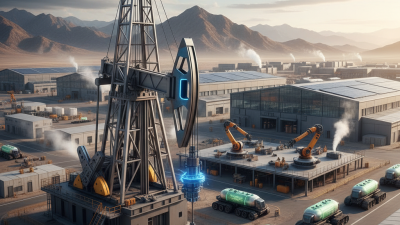
In 2026, global buyers of well drilling machines will witness significant innovations. Enhanced automation is a key focus. According to a recent industry report, automated drilling systems can increase efficiency by up to 30%. These systems allow for real-time data collection and analysis, improving decision-making processes on-site.
Wireless technology is becoming essential in drilling equipment. This feature not only strategizes operations but also enhances safety by reducing on-site human presence. In regions with high labor costs, such innovations can be not just beneficial but necessary. The challenge, however, lies in ensuring that these technologies are reliable and easy to integrate with existing systems.
Another critical trend is the shift towards eco-friendly practices. According to the Global Drilling and Production Report 2023, companies are increasingly focusing on reducing their carbon footprints. This includes using biodegradable fluids and energy-efficient equipment. It is not just about compliance; it reflects a growing commitment to environmental stewardship in the industry. Buyers should also consider factors like maintenance ease. Complexity in repair processes can lead to unexpected downtimes and costs.
Market Trends Driving Demand for Advanced Well Drilling Solutions
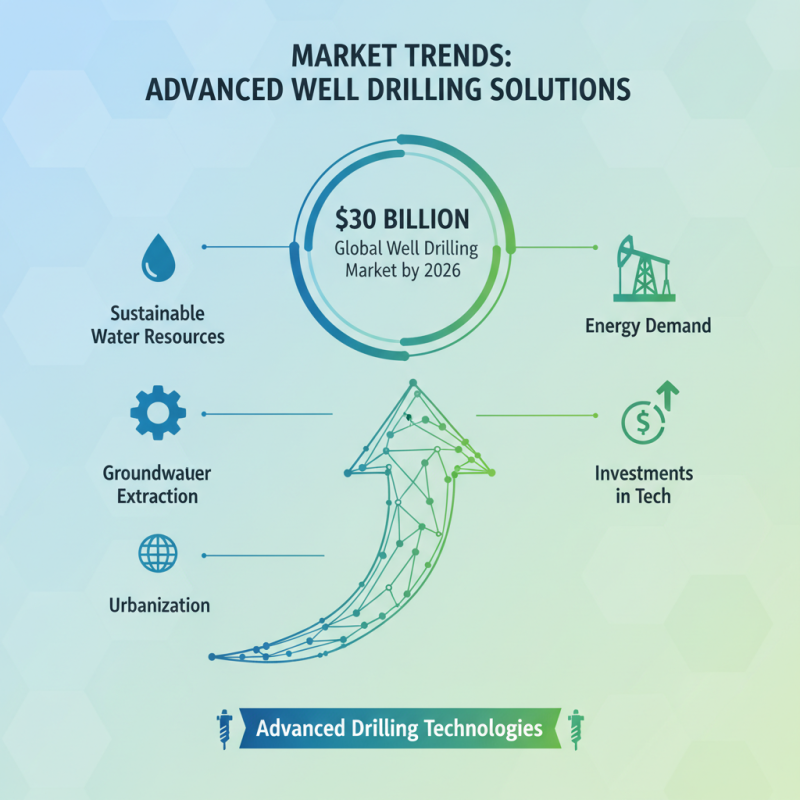
The demand for advanced well drilling solutions is on the rise, driven by several market trends. According to a recent industry report, the global well drilling market is projected to reach $30 billion by 2026. A significant part of this growth stems from the increasing need for sustainable water resources and energy. As urbanization continues, groundwater extraction becomes more critical. This has prompted investments in advanced drilling technologies.
Smart drilling machines are becoming essential in this evolution. Innovations such as automated systems and real-time data analysis enhance efficiency and reduce costs. Reports show that companies utilizing these technologies see a 25% increase in operational efficiency. However, the integration of such technologies poses challenges. Organizations must train staff to handle advanced systems, which can lead to a temporary decline in productivity.
Environmental concerns are also shaping the market. Many countries are tightening regulations on drilling practices. This pushes companies to adopt eco-friendly solutions. A report from the International Energy Agency indicates that sustainable drilling practices can reduce operational emissions by up to 40%. Stakeholders must continually assess these trends to remain competitive and compliant.
Regional Insights: Well Drilling Machine Trends Across the Globe
In recent years, the well drilling machine market has witnessed notable trends shaped by regional needs. In North America, the focus is on efficiency and sustainability. Advanced technologies are increasingly integrated into drilling machines to reduce environmental impact. Companies explore methods to minimize water usage and lower emissions. This shift addresses both regulation and consumer demand for greener practices.
In contrast, the Asia-Pacific region experiences rapid infrastructure development. Countries invest heavily in drilling machines to support urbanization. However, they face challenges such as a lack of skilled labor and fluctuating material costs. Not every project adopts the latest technology. Traditional techniques still play a significant role in some areas. Key stakeholders must adapt to local conditions to succeed.
Europe is leaning towards automation and digitization. Many drilling companies are using data analytics to improve drilling precision. This trend is not without obstacles. The reliance on digital systems raises concerns about cybersecurity. Not all operators are ready for this transition. Continuous training and investment in technology are crucial for maintaining competitiveness in the market.
2026 Top Well Drilling Machine Trends for Global Buyers
| Region |
Trend |
Growth Rate (%) |
Key Drivers |
| North America |
Automation and Remote Monitoring |
12% |
Technological advancements, labor shortages |
| Europe |
Sustainable Drilling Solutions |
10% |
Regulations, environmental concerns |
| Asia-Pacific |
Increased Investment in Infrastructure |
15% |
Urbanization, government support |
| Latin America |
Technological Advancements |
8% |
Access to new technologies, training |
| Middle East and Africa |
Adoption of Renewable Energy |
9% |
Market diversification, energy transition |